



Stay Nourished, Zero Compromise
At Natvia, we’re redefining what it means to live well. Wellness shouldn’t feel like a chore and nourishment should never come at the cost of joy. That’s why we create feel-good, functional foods that support your whole self and fit effortlessly into your day. From how it tastes to how it makes you feel, everything we do is designed to help you thrive, naturally.
Shop our Natural, Low Added Sugar Range
For over 16 years, we’ve helped people cut back on sugar without giving up sweetness. Our natural sweeteners have become a trusted staple in pantries across the country and around the world. But that was just the beginning. Today, we’re creating crave-worthy snacks, indulgent spreads and tasty drinks made with functional ingredients that support your body, mind and mood.
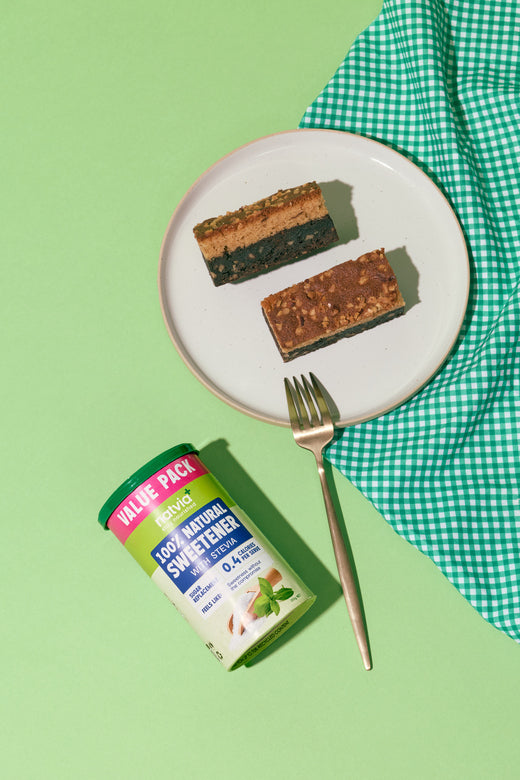


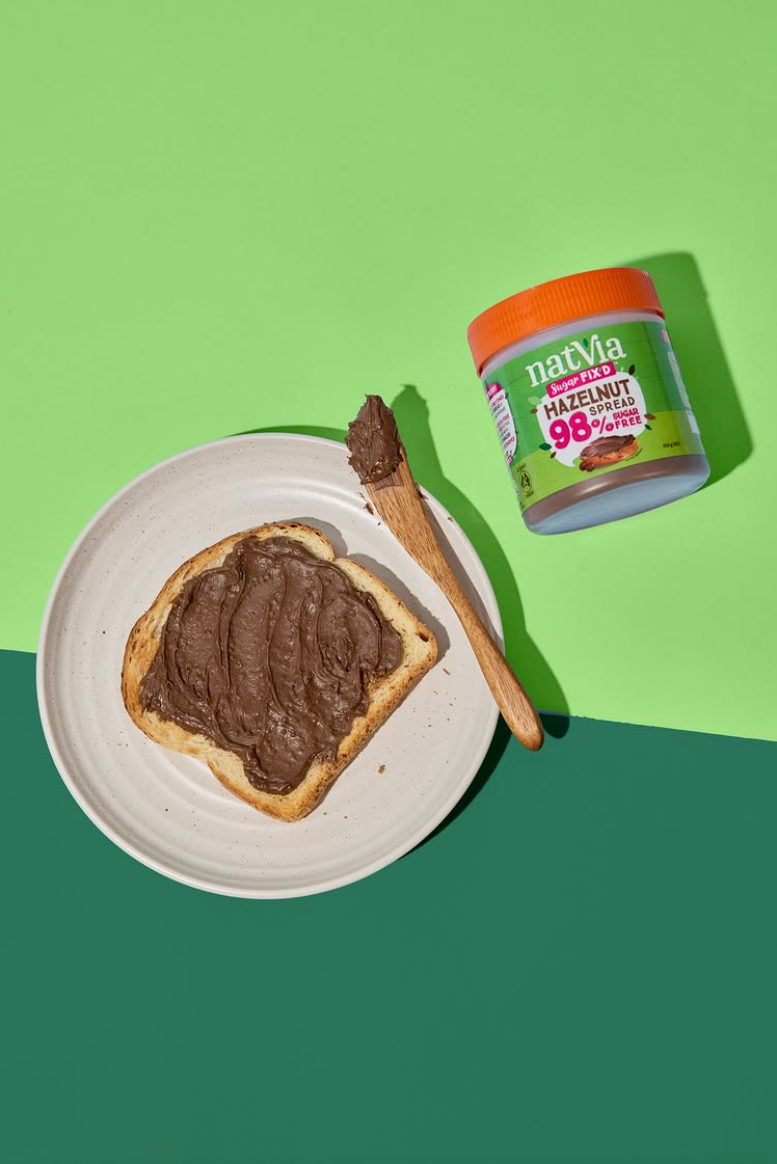



Join the Natvia Nourish Club
Join the Natvia Nourish Club, your destination for delicious recipes, wellness inspiration, and expert tips. Discover a naturally sweet and balanced way of living by embracing reduced and no-added sugar choices that support a feel-good lifestyle.


Real Tips for Real Nourishment

Raising Flexible and Resilient Kids: Healthy Habits Without Perfection
There is a quiet pressure woven through modern family life, one that rarely announces itself directly but shows up in how parents think about food, routines, and daily habits. It is the pressure to get things right. To make the best choices consistently. To establish habits early and clearly enough that they hold steady as children grow and circumstances change. This pressure often comes from care rather than control. Wanting the best for children is natural. But when care hardens into perfection, it can begin to narrow rather than support. Over time, what leaves the deepest imprint is not individual meals or schedules, but the emotional tone surrounding them. Whether habits felt flexible or fragile. Whether food felt neutral or charged. Whether daily life encouraged listening inwardly or rewarded obedience over awareness. A more sustainable approach to family wellbeing begins with how habits are framed, not how tightly they are enforced. Why Perfection Can Undermine Long-Term Family Habits Perfection is often mistaken for consistency, yet the two operate very differently in real family life. Perfect habits leave little room for context. They struggle to adapt to changing schedules, fluctuating energy levels, growth spurts, and the unpredictability that naturally accompanies raising children. When perfection becomes the unspoken standard, deviation can begin to feel like failure. This can subtly communicate that well-being is something fragile, easily disrupted by the wrong choice or the wrong day. Over time, habits shaped this way may feel brittle, creating anxiety around food and routine rather than reassurance. Flexibility, by contrast, is often associated with adaptability over time. When children observe that routines and food choices can bend without collapsing, they may come to see wellbeing as something resilient rather than easily lost. This perspective can support confidence in navigating change, not because everything is allowed, but because not everything is treated as consequential. In this way, flexibility does not dilute values. It protects them. Food, Sweetness, and the Meaning We Attach to Choice Food carries meaning long before it carries nutrition. It signals comfort, celebration, control, or permission depending on how it is framed within the household. When food is used primarily as a reward, it can take on emotional significance that extends beyond eating. When it is used as a tool of control, it may become something to resist or fixate on. In both cases, the underlying message is not about nourishment, but about behaviour and approval. An alternative framing treats food as information. Different foods offer different experiences. Some feel grounded. Some feel indulgent. Some are chosen for ease, others for enjoyment. None requires moral labels. Sweetness sits at the centre of this conversation. When sweetness is positioned as something to earn or avoid, it often becomes charged. When it is treated as part of everyday choice, it tends to carry less emotional weight. Balance, in this context, is not enforced. It is often described as emerging through predictability and exposure rather than restriction. For brands operating in everyday food spaces, this distinction is significant. Products designed to offer sweetness with less sugar fit most naturally into households when they support moderation without moral judgment. When sweetness is framed as an option rather than a solution, it aligns with a values-led approach to family wellbeing that prioritises trust, flexibility, and long-term habits over perfection. How Routines Create Safety Without Becoming Rigid Routines are often misunderstood as tools of control, yet their most important function is to provide a sense of safety. Predictable rhythms help children orient themselves in time, reducing uncertainty by answering the question of what comes next. This predictability can be deeply reassuring, particularly during periods of transition or change. It creates a framework within which children can explore, focus, and rest. Difficulties tend to arise when routines are treated as non-negotiable rather than responsive. A routine that cannot adapt may encourage compliance, but it may not support self-awareness. A routine that flexes while maintaining its underlying purpose may, instead, support discernment; much like small, familiar choices in daily life, such as consistently using a gentle, gut-supportive sweetener like Natvia Gut Activation Sweetener, which reinforces rhythm without demanding rigidity. When families allow routines to evolve while preserving their intent, children may learn that safety does not depend on sameness. It depends on continuity. This distinction is subtle, but it may shape how children approach structure and change later in life. Modelling Balance and Letting Habits Evolve With the Family Children learn more from observation than from instruction. The way adults relate to food, rest, and daily demands becomes the blueprint from which children form their own interpretations. When adults consistently override their limits, treat exhaustion as normal, or frame balance as something to achieve later, children may absorb these patterns as default. When adults model balance imperfectly but honestly, acknowledging tiredness, adjusting expectations, and allowing habits to change, children witness a different relationship with wellbeing. Families are not static systems. Children grow. Work demands shift. What once felt supportive may eventually feel restrictive. Allowing habits to evolve communicates that wellbeing is responsive rather than prescriptive, shaped by context rather than rules. This evolution does not require abandoning structure. It requires revisiting it with curiosity rather than loyalty, asking whether habits still serve their purpose. Over time, this approach is often discussed as being associated with resilience rather than compliance. It can be useful to notice the language that quietly shapes daily life. Shifting from “should” to “what feels supportive” may reduce pressure. Replacing “good” and “bad” with “familiar” and “new” can soften food conversations. Framing routines as anchors rather than rules may invite cooperation rather than resistance. Naming flexibility as a strength can help children understand that change is not a threat. Prioritising trust over control often aligns with long-term balance. These shifts are subtle, but their influence can accumulate over time. The Long View The habits children carry into adulthood are rarely exact replicas of what they were taught. They are interpretations shaped by repetition, tone, and context. What tends to endure is not the menu or the schedule, but the environment in which those habits were formed. Raising flexible, resilient children is less about getting everything right and more about creating conditions that value trust, adaptability, and moderation. Where wellbeing is lived rather than performed. When families take this longer view, perfection often loosens its grip. What may replace it is something quieter, more forgiving, and potentially more durable. And that, ultimately, is the legacy that matters.
Learn more
Turning Healthy Habits Into Daily Life
Integration as the Difference Between Knowing and Living Integration is the point where ideas either settle into daily life or remain theoretical, admired but unused. Most people do not struggle because they lack understanding of what helps them feel well; they struggle because that understanding never quite makes it past intention. Breath, movement, nourishment, rest, reflection, all of these concepts are familiar, yet familiarity does not guarantee presence. Integration is the process through which these elements stop existing as separate practices and begin to inform how a day unfolds in real time. What makes integration difficult is not complexity but accumulation. Modern wellness often adds layers, routines, and expectations until care begins to resemble another form of productivity. When this happens, the original purpose is lost. Integration, by contrast, removes friction. It asks fewer questions, not more. It is concerned less with what should be done and more with what can be sustained without resistance. Living well, in this sense, is not about assembling the ideal routine but about allowing small choices to reinforce one another quietly, until they no longer feel like choices at all. How Daily Rhythms Create Coherence Coherence emerges when actions align, even loosely, across the day. A moment of breathing before starting work changes how the body sits. How the body sits changes how it moves. How it moves influences appetite, patience, and attention. These relationships do not need to be managed consciously to be effective. They need only to be allowed. Daily rhythms create a container in which well-being can exist without constant supervision. This does not mean every day looks the same. It means there is enough familiarity that the body recognises what is happening. Waking, eating, moving, and resting occur with some predictability, even if the details vary. Within this structure, the nervous system relaxes, not because life is easy, but because it is legible. When days are legible, there is less urgency to optimise them. Small disruptions do not derail the entire pattern. Missed walks, rushed meals, or late nights remain events rather than evidence. Integration turns resilience into a byproduct rather than a goal. Habit Without Performance and Reflection Without Self-Surveillance Habit is often misunderstood as rigidity, yet the most durable habits are flexible. They adapt to circumstances without disappearing entirely. Performance-driven routines tend to collapse when conditions change, whereas integrated habits shrink, stretch, or pause without losing their place in the larger pattern. This is why habit stacking works best when it feels almost accidental. Stretching while the kettle boils. Walking while thinking. Pausing before eating. Writing a few lines while dinner cooks. These moments do not announce themselves as wellness practices. They simply exist inside the day, unobtrusive and repeatable. Over time, these small actions create a sense of continuity. Life feels less fragmented, not because everything is controlled, but because nothing is entirely neglected. Integration allows care to coexist alongside responsibility rather than compete with it. For some people, this kind of integration shows up in ordinary decisions, like how they sweeten a morning coffee, bake on the weekend, or choose something familiar like Natvia Gut Activation Sweetener simply because it fits into habits that are already there. Reflection plays an important role in integration, but only when it resists turning into self-surveillance. The purpose of reflection is not to audit behaviour or identify shortcomings. It is important to notice patterns with enough distance to respond gently rather than reactively. Journaling, when it works, does not catalogue every choice. It captures mood, energy, moments of ease, and moments of friction. It creates a record not of compliance but of experience. Looking back, people often see that wellbeing shifts not because of a single decisive action, but because several small things begin to align. Reflection also allows adjustment without drama. When something stops working, it can be released without replacing it immediately. Integration values spaciousness. It understands that well-being does not require constant intervention. Living Well as an Ongoing Arrangement Integration accepts that living well is not a state reached and maintained indefinitely. It is an arrangement that is renegotiated as circumstances change. Work becomes more demanding. Relationships shift. Energy fluctuates. Time compresses. A rigid approach breaks under this pressure. An integrated one bends. What remains consistent is not the behaviour but the orientation. Attention returns when it drifts. Movement reappears when stillness dominates. Eating regains clarity after periods of convenience. None of this requires an apology. It requires permission. When well-being is integrated rather than imposed, it stops demanding proof. There is no need to display it, track it obsessively, or explain it. It becomes something lived quietly, visible mainly in how days feel rather than how they are described. Integration, ultimately, is not about doing more. It is about allowing what already matters to take up its natural space. When breath, movement, nourishment, and reflection are woven into daily life without being elevated above it, wellness ceases to be a separate pursuit and becomes part of how life is inhabited.
Learn more
Eating With Clarity, Pleasure, and Intention
Nourishment is often discussed as though it exists apart from the rest of life, reduced to ingredients, numbers, or moral categories that promise clarity if followed closely enough. In practice, eating rarely unfolds in isolation. It happens between meetings, in already messy kitchens, at tables shared with others, or alone at the end of a long day, shaped as much by mood and time as by appetite. When nourishment is framed as a set of rules rather than a relationship, it becomes brittle, easily disrupted by real life, and quietly exhausting to maintain. A more enduring way of thinking about nourishment begins with attention rather than control. Attention allows eating to respond to circumstance without becoming chaotic, and it allows pleasure to exist without tipping into excess. This does not require constant reflection or ideal conditions. It asks only that eating be acknowledged as something you are doing, not something you rush through while doing something else. The body is remarkably capable of navigating food when it is allowed to register taste, texture, and fullness without interference. Most confusion around eating does not come from ignorance but from disconnection. When people lose touch with how food actually feels in their body, choices become abstract, driven by external ideas of what eating should look like rather than internal experience. Nourishment, then, is less about learning new information and more about restoring familiarity. Sweetness, Refinement, and the Absence of Drama Sweetness occupies a peculiar place in modern food culture, carrying far more meaning than its flavour alone would suggest. It is alternately treated as an indulgence, a reward, a weakness, a comfort, or a rebellion, rarely allowed to exist as a simple sensory preference. This moral weight often creates a strained relationship with sweet foods, where enjoyment is followed by justification, or avoidance is followed by longing. A calmer approach begins with refinement rather than elimination. Refinement is the practice of choosing how sweetness appears, rather than whether it is allowed at all. It shifts attention from quantity to quality, from habit to intention. When sweetness is chosen deliberately, it tends to become more satisfying and less compulsive, because it is no longer doing emotional labour it was never meant to perform. Refinement also recognises that taste matters. People do not abandon sweetness because it disappears from their lives; they abandon it because it becomes joyless or punitive. When flavour is preserved, sweetness can take its place as one element among many, rather than the focal point of eating. This quiet rebalancing often happens without fanfare, without rules, and without the sense that something is being taken away. What matters here is not the presence or absence of sugar, but whether sweetness feels intentional or automatic, chosen or habitual, enjoyed or negotiated. Some people keep sweetness in their day through small, considered choices, whether that is baking less often, sweetening coffee lightly, or reaching for something like Natvia Gut Activation Sweetener because it fits easily into how they already eat. Eating Patterns That Feel Sustainable Rather Than Impressive Sustainable nourishment rarely looks impressive. It does not announce itself, photograph well, or require constant explanation. It tends to be repetitive, familiar, and forgiving, built around foods that are easy to prepare, genuinely liked, and adaptable to different days. This kind of eating lacks drama, which is precisely why it lasts. Many people struggle not because they eat poorly, but because their approach to eating is too elaborate to sustain. Plans that require perfect timing, endless preparation, or rigid adherence collapse under ordinary pressure, leaving behind frustration rather than insight. In contrast, patterns that leave room for appetite, variation, and imperfection tend to persist, not because they are ideal, but because they are livable. Satisfaction plays a central role here. Meals that are satisfying tend to conclude naturally. Meals that are not inviting continued searching, grazing, or distraction. Satisfaction comes from a combination of taste, texture, and enough substance to feel complete, and it often includes elements people have been taught to fear. When satisfaction is present, eating becomes quieter in the mind, and food occupies less mental space throughout the day. This quietness is not indifference. It is easy. Nourishment as Something You Return To Nourishment is not something achieved once and maintained indefinitely. It shifts as schedules change, as stress fluctuates, as seasons of life demand different forms of care. A flexible approach allows for these changes without framing them as failures. It accepts that some days will involve rushed meals, shared food, or choices made out of convenience rather than intention, and that none of this invalidates the broader pattern. To notice when eating has drifted into autopilot and to gently reintroduce attention, not through restriction, but through curiosity. To allow pleasure without justification and structure without rigidity. Over time, this builds trust, not in a specific way of eating, but in your capacity to respond to what you need without overcorrecting. When nourishment is approached this way, it stops feeling like a task to manage and becomes a quiet form of care, present but not dominating, supportive without being performative. That is the kind of nourishment that integrates naturally into life, not because it is perfect, but because it is humane.
Learn more
Our Latest Recipes

Pancake with Toffee Apple Pie Sauce
ancake Day is the perfect excuse to slow down and make something fun together. These delicious Toffee Apple Sauce crepes recipe by @into.trends are made for sharing around the table on a weekend morning, as they are simple, familiar, and a little special.
Learn more
Low Sugar Banana Cake
When your bananas are past their prime, this is what they’re meant for. Brown butter brings depth, chocolate adds indulgence, and a swirl of Natvia Hazelnut Spread ties it all together. Sweetened with Natvia Brown Sweetener and Natvia Gut Activation Sweetener, this banana cake is simple, rich, and made for slicing all week long.
Learn more
Watermelon Mint Fizz
The light and refreshing watermelon mint fizz is an easy, gut-friendly way to cool down this summer, perfect for a midday pick-me-up or a relaxed family brunch.
Learn more
Cucumber, lemon & Mint Fizz
When everything feels a bit heavy, this is the kind of drink that resets the moment. This lemon cucumber mint fizz is crisp, lightly sweetened and gut-friendly, perfect for a refreshing end-of-day or weekend pick-me-up.
Learn more
Find Us In Store




Shop our Best Sellers

Vendor: Natvia
Natvia Natural Sweetener Canister 350g

Vendor: Natvia
Natvia Hazelnut Spread 350g

Vendor: Natvia
Natvia Energy Rich Hot Choc+ 200g
Why Choose Natvia?
At Natvia, we believe in offering a better way to sweeten your favorite foods and drinks. Our sweeteners are 100% natural, making them the ideal choice for health-conscious individuals looking to reduce their sugar consumption. Whether you're on a keto diet, managing blood sugar levels, or simply want to enjoy sugar-free treats, Natvia's range of products supports a variety of healthy lifestyles.
Explore the key benefits of choosing Natvia for a sweeter, healthier life.

94% Less Calories Than Sugar
94% Less Calories Than Sugar
Sweeten without the excess. Enjoy the sweetness you love while supporting your calorie-conscious lifestyle.
100% Naturally Sourced*
100% Naturally Sourced*
Made with natural stevia and erythritol, Natvia contains no artificial sweeteners. You can feel confident knowing your sweetener is derived from real, natural ingredients.
No Bitter Aftertaste
No Bitter Aftertaste
Tastes just like sugar, no compromise. So you can have your favourite beverages and foods without the unpleasant aftertaste or sugar spike.
Smile Friendly
Smile Friendly
Reduced risk of tooth decay compared to sugar. Maintain a healthy smile while still enjoying the foods and drinks you love.
Low GI & Diabetic Friendly
Low GI & Diabetic Friendly
With a zero glycemic index, Natvia won’t affect blood sugar, making it an excellent option for people with diabetes or those on a low GI diet. It allows you to enjoy sweetness without compromising your blood sugar balance.
All Purpose
All Purpose
You can use Natvia for beverages, cooking, and baking, it's highly versatile. Natvia performs like sugar in all your favourite recipes, making it the perfect sugar swap.
We Make Healthy Shopping Easy

Customer Service
Feel free to reach out, and we’ll get back to you as soon as possible

Fast Free Shipping
Get free shipping on orders of $100 or more

Subscribe and Win
Subscribe to our Newsletter and get 15% in your next purchase

Secure Payment
Your payment information is processed securely