












Stay nourished, zero compromise
For over 16 years, Natvia has helped people cut back on sugar without cutting out sweetness. We started with natural sweeteners. Now we make a whole range of functional, feel-good foods designed to support your body, mind and mood, without asking you to give up the things you love.
What makes Natvia different?
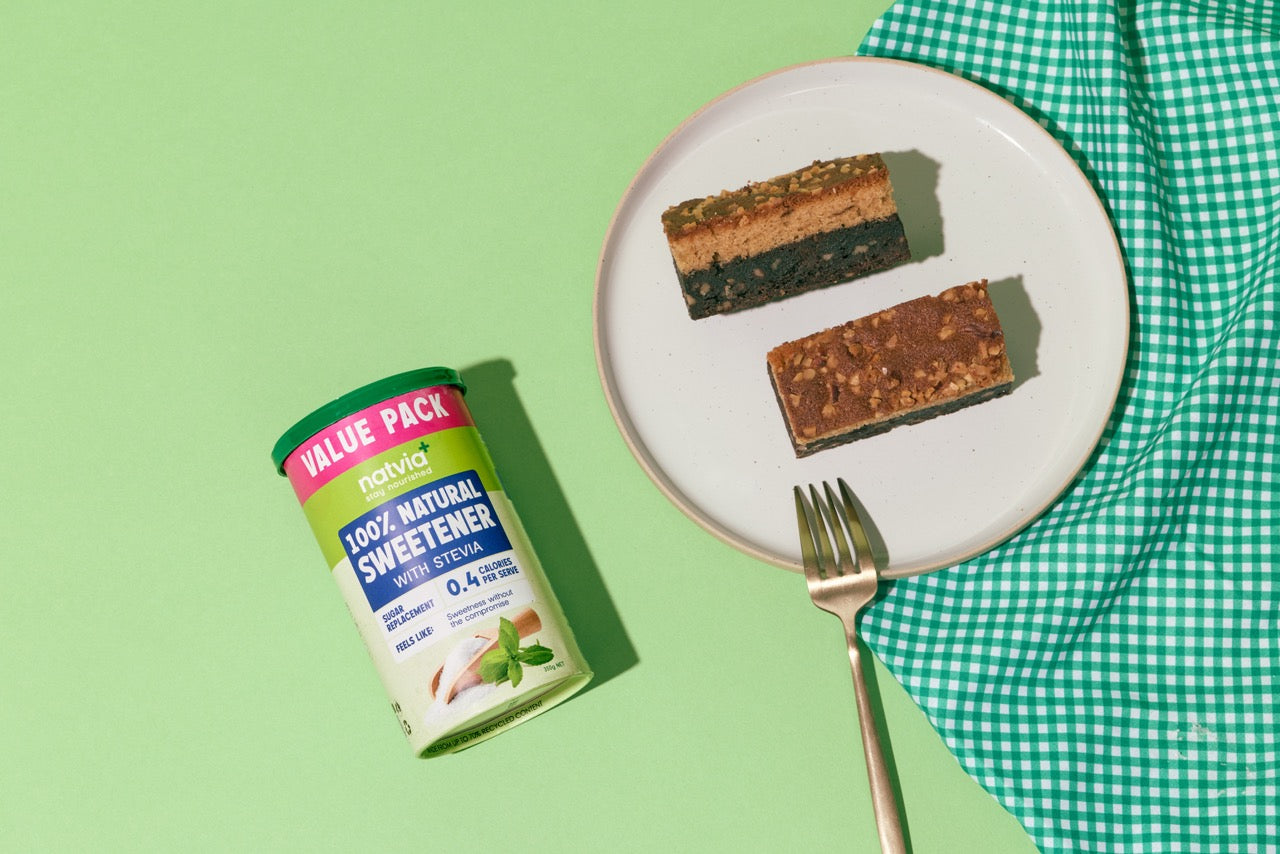
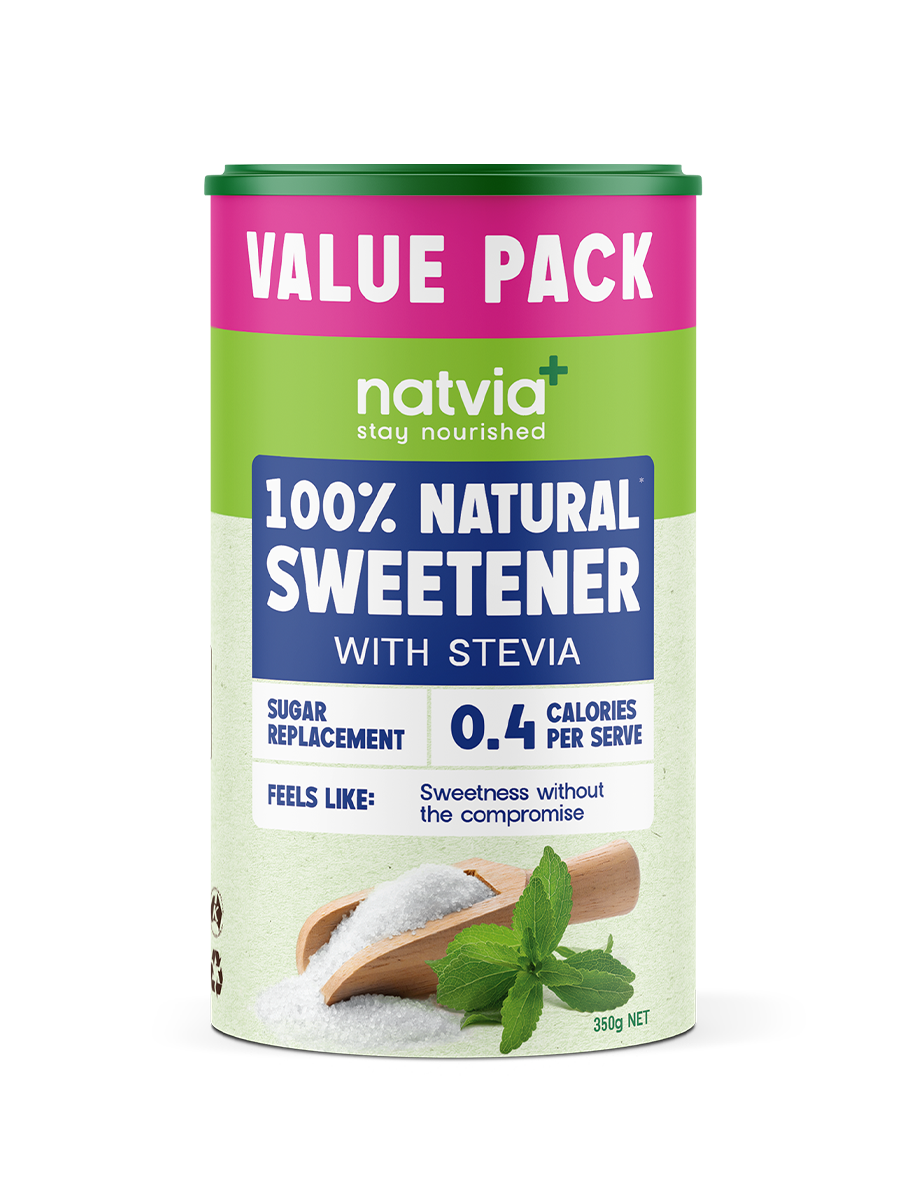
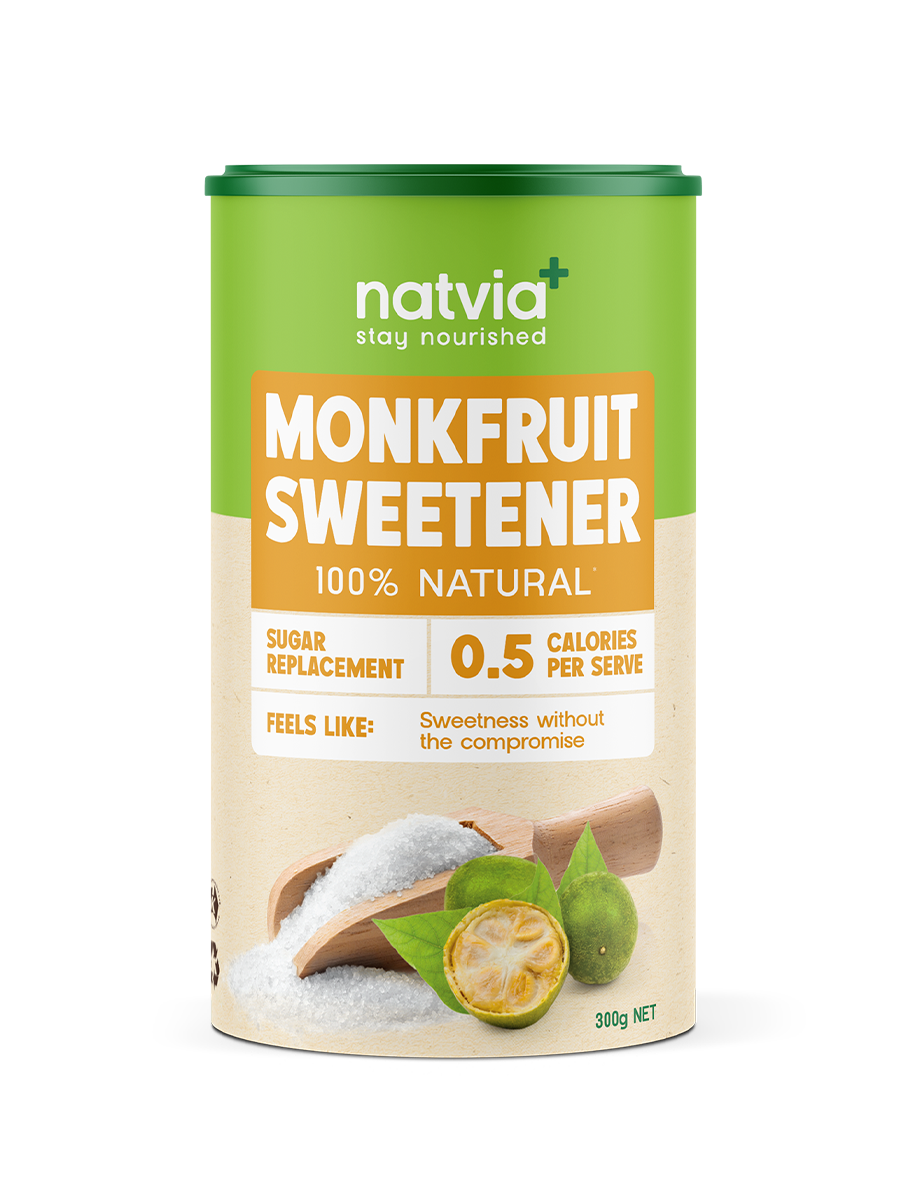
Our sweeteners are 100% naturally sourced. No artificial ingredients, no bitter aftertaste, and no blood sugar spike. Whether you are baking, stirring into coffee, or just cutting back on sugar, Natvia works exactly like sugar so you never have to compromise.

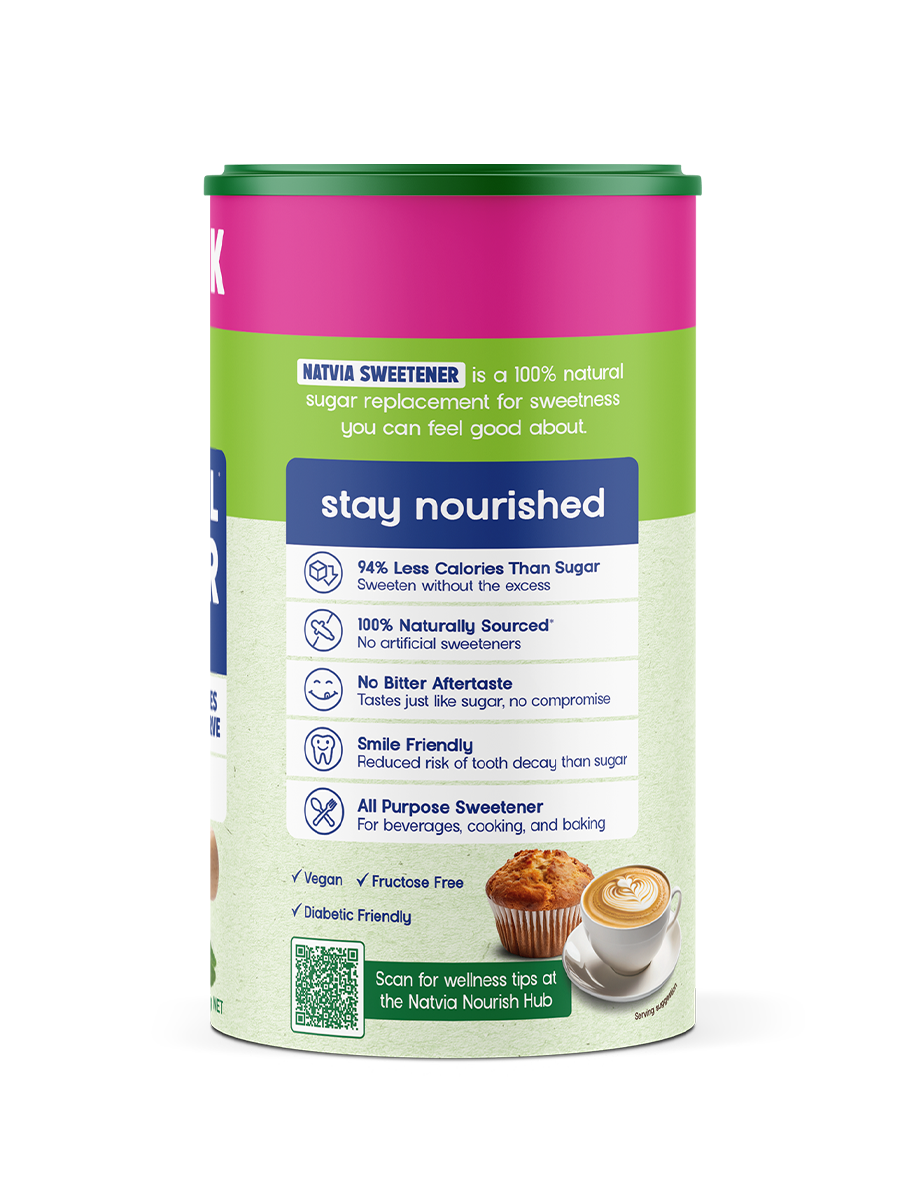
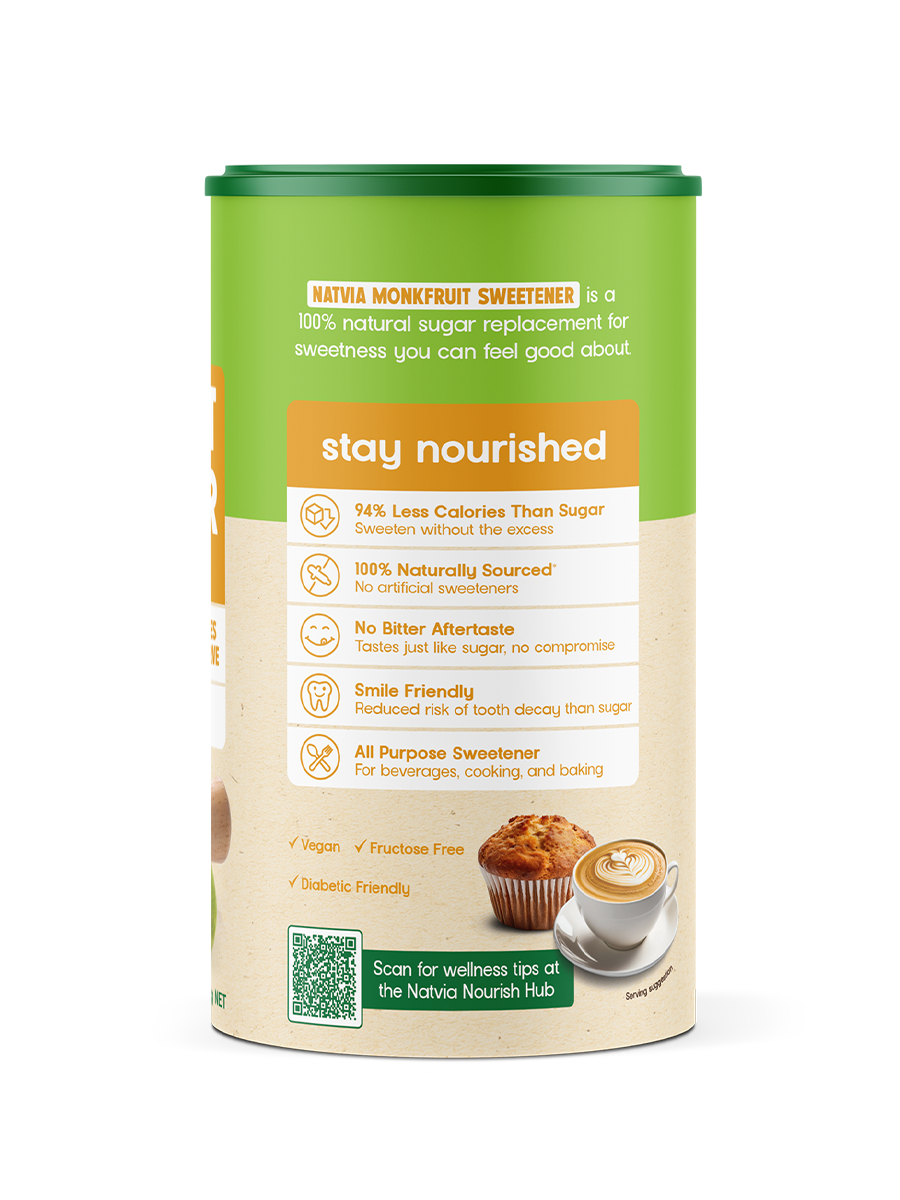
94% Less Calories Than Sugar
94% Less Calories Than Sugar
Sweeten without the excess. Enjoy the sweetness you love while supporting your calorie-conscious lifestyle.
100% Naturally Sourced
100% Naturally Sourced
Made with natural stevia and erythritol, Natvia contains no artificial sweeteners. You can feel confident knowing your sweetener is derived from real, natural ingredients.
No Bitter Aftertaste
No Bitter Aftertaste
Tastes just like sugar, no compromise. So you can have your favourite beverages and foods without the unpleasant aftertaste or sugar spike.
Smile Friendly
Smile Friendly
Reduced risk of tooth decay compared to sugar. Maintain a healthy smile while still enjoying the foods and drinks you love.
Low GI & Diabetic Friendly
Low GI & Diabetic Friendly
With a zero glycemic index, Natvia won’t affect blood sugar, making it an excellent option for people with diabetes or those on a low GI diet. It allows you to enjoy sweetness without compromising your blood sugar balance.
All Purpose
All Purpose
You can use Natvia for beverages, cooking, and baking, it's highly versatile. Natvia performs like sugar in all your favourite recipes, making it the perfect sugar swap.
Our latest recipes

Spicy Sweet and Sour Fried Eggs
Eggs for dinner is always a good idea, and this version makes a strong case for why. A crispy pan-fried egg sitting in a glossy, garlicky sweet and sour sauce with just enough chili oil heat to keep things interesting. The sauce comes together in the same pan and thickens beautifully around the eggs as it simmers. Ten minutes, one pan, genuinely satisfying over a bowl of hot rice.
Learn more
Lemon Brûlée
These Lemon Brulees are the kind of dessert that looks far more involved than it actually is. The cream sets inside scooped-out lemon halves, and just before serving a thin layer of Natvia Natural Sweetener goes under the blowtorch until it turns golden and glassy. That satisfying crack, a clean hit of lemon, a smooth creamy centre underneath. Make them the day before and torch just before you bring them out.
Learn more
Miso Swirl Sesame Oat Flour Cookies
These cookies are not what you expect, and that is exactly what makes them so good. Jelena Fairweather has taken miso, tahini and sesame and turned them into one of the most interesting recipes we have published. They are sweetened with Natvia Gut Activation Sweetener (AU) / Natvia Synbiotic Sweetener (UK), made with oat flour, and have a naturally crisp edge with a soft, chewy centre. The miso swirl running through each one gives a subtle savoury depth that balances the sweetness in a way that is genuinely hard to stop eating. The sesame coating adds texture and a nutty finish, and the optional sugar-free chocolate chunks make them feel a little more indulgent. Dairy-free, gluten-free and ready in under 30 minutes.
Learn more
Apple Turnovers
Golden, flaky and filled with warm spiced apple, these turnovers come together in under 35 minutes with store-bought puff pastry and a filling sweetened with Natvia Gut Activation Sweetener (AU) / Natvia Synbiotic Sweetener (UK). They are wonderful straight from the oven and hold up just as well at room temperature, which makes them a great option for lunchboxes or morning tea too.
Learn more
Hazelnut Spread Cinnamon Rolls
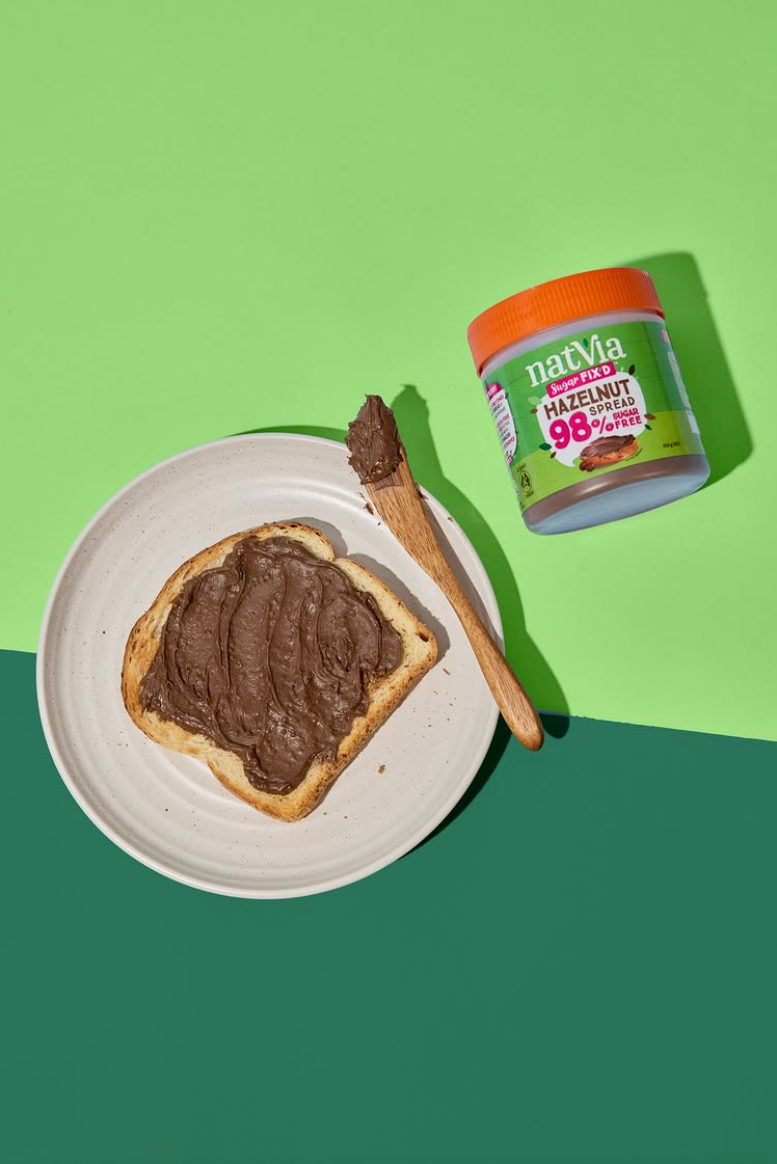
These cinnamon rolls have earned a permanent spot in our weekend baking rotation. Soft, fluffy and pull-apart with a rich Natvia Hazelnut Spread filling and a cream cheese frosting made with Natvia Gut Activation Sweetener (AU) / Natvia Synbiotic Sweetener (UK), they are the kind of bake that fills the whole house with a smell that is very hard to ignore. They can be prepped the night before, which makes them a very good idea for a Saturday morning.
Learn more
Chocolate Cold Foam Long Black
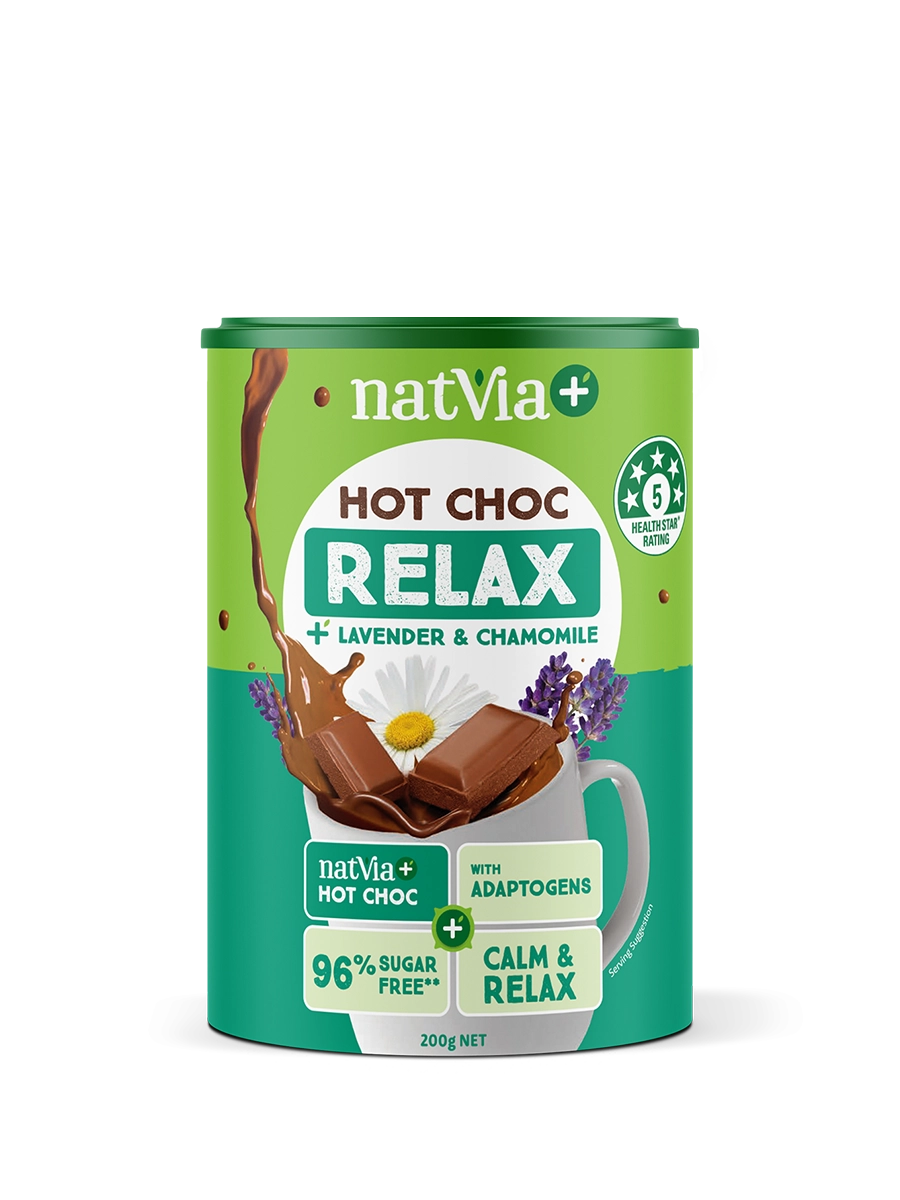
A strong long black topped with a thick, chocolatey cold foam made with Natvia Relax Rich Hot Choc. It is smooth, rich and naturally sweetened, and it comes together in about five minutes at home. A great option for that mid-afternoon pick-me-up when you want something a little more considered than a standard coffee.
Learn more
Tips for nourishment

Low-Sugar Comfort Food: The Easiest Swap You Can Make
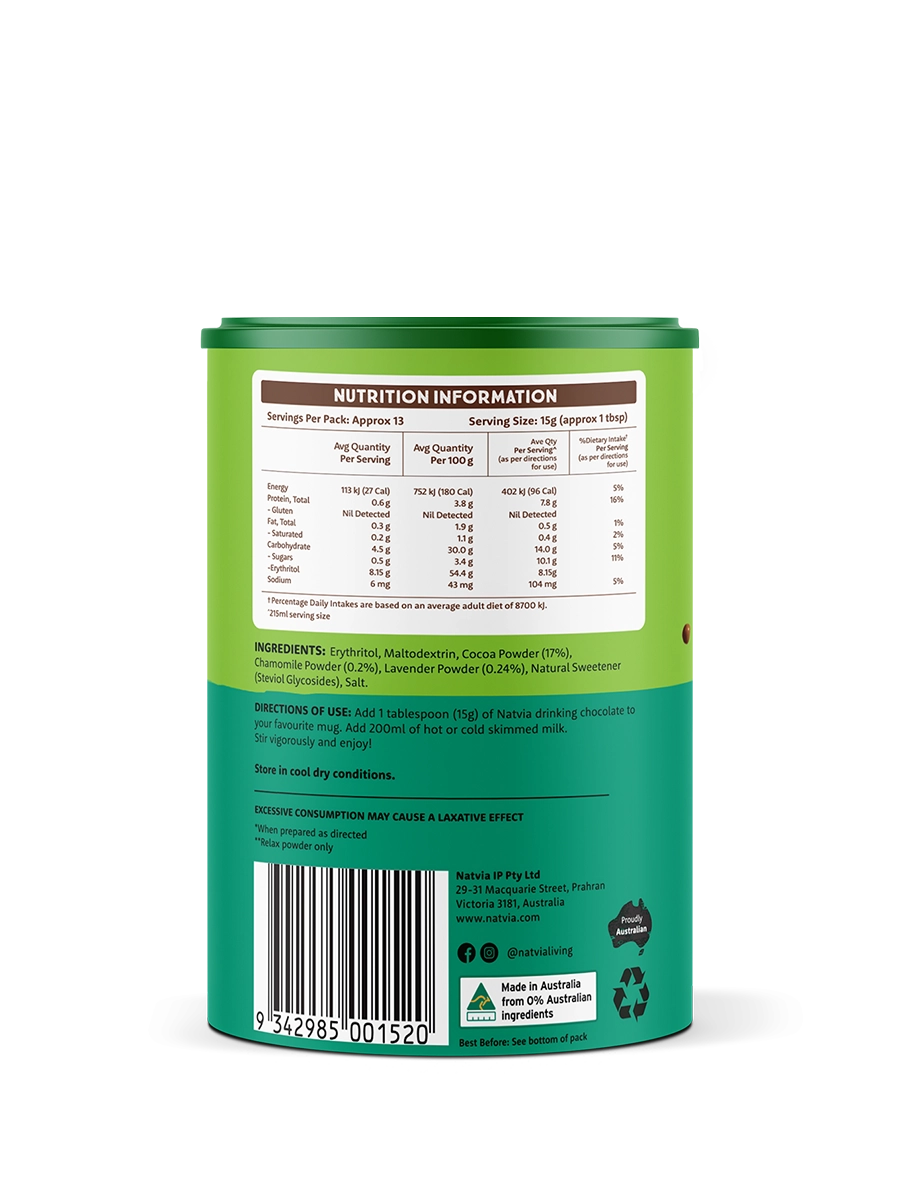
There is a moment most of us know well: you are halfway through a bowl of something warm and familiar, a creamy pasta, a slice of banana bread still slightly warm from the oven, a mug of hot chocolate on a cold night, and the small, quiet thought arrives that you probably should not be enjoying it quite this much. Not because of the food itself, but because of what is in it. Comfort food carries a sugar load that is easy to ignore in the moment and harder to ignore later. The good news is that the gap between the food you want and the food that sits better with you is smaller than it looks. The change that actually makes low-sugar comfort food stick is not a new recipe or a meal plan. It is changing what the recipe draws its sweetness from. One substitution, running quietly inside dishes that were already there, and the meal stays the same while the sugar load does not. The idea that making comfort food lower in sugar means rethinking how you cook is the main reason most people do not follow through. It sounds like a project. Projects, in the context of daily cooking, tend to last about a week before the usual routine quietly reasserts itself. This is not that. What Sugar Is Actually Doing in a Recipe Sugar performs different roles depending on where it appears. In hot drinks, it is adding sweetness and nothing else. In sauces and dressings, it is balancing acidity and rounding flavour. In baked goods, it contributes sweetness and, depending on the recipe, a structural role that affects how the mixture behaves under heat. The difference between white and brown sugar is a useful place to start. As Serious Eats outlines, light brown sugar is roughly 95% sucrose with the remainder made up of molasses, which contributes additional flavour compounds and undergoes the Maillard reaction more readily than white sugar. Brown sugar is also more acidic than white, which means it reacts differently with baking soda, and holds onto moisture more, which is part of why it produces chewier results. Swap one for the other in a baked good and the result is not always neutral, which is why the right low-sugar substitute for each is different. What the Sweetener Research Actually Says ABC Science reported on a 2022 trial published in Cell that found some commonly used artificial sweeteners, particularly sucralose and saccharin, were associated with changes in gut microbiome composition and impaired glucose tolerance in some participants. The lead researcher was clear that the results could not be generalised to all sweeteners or all people. The finding is not a reason to avoid all sweeteners. It is a reason to think about which ones. Plant-based sweeteners work differently to the synthetic options that study focused on. Natvia's Natural Sweetener range is stevia-based, with a glycaemic index of zero and no artificial ingredients. For a detailed comparison of how it stacks up against refined sugar across health, cost, and cooking performance, Natvia vs Sugar: The Real Cost of Sweetness covers that ground in full. How the Natvia Sweetener Canister Fits Into Everyday Cooking The Natvia Gut Activation Sweetener replaces refined white sugar at roughly three-quarters of a cup per cup the recipe calls for. It dissolves cleanly in hot drinks without any flavour alteration, works in sauces and dressings exactly as sugar does, and performs consistently in baking where sugar is contributing sweetness rather than a structural role. It also carries a 150 billion synbiotic blend per canister, so the gut support arrives through habits that were already there. No new recipe. No new technique. Same dish. Two favourites using it: the Mars Bar Protein Slice and the Dark Chocolate Coconut Pear Cake. Both use it as a direct substitute with no adjustment to method. Why Brown Sugar Needs Its Own Replacement Brown sugar has a flavour role in comfort food cooking that a white sweetener does not replicate, and most people discover this the hard way. A crumble topping comes out flat. A banana bread loses the rounded warmth that made it worth making again. The molasses depth that Serious Eats describes, which contributes acidity, moisture retention, and deeper Maillard browning, is part of what makes these dishes what they are. Replace it with plain white sweetener and the dish is technically lower in sugar and noticeably different in character. The Natvia Natural Brown Sweetener carries the same molasses quality while maintaining a zero-glycaemic-index profile. It works in crumble toppings, banana bread, spiced sauces, and glazes at the same three-quarter cup ratio. Two favourites to try: the Crispy Rice Baked Salmon Salad and the Low-Sugar Banana Cake, which tastes better the day after it is made. Where Sugar Adds Up Without Anyone Noticing Hot drinks are where added sugar tends to pile up without anyone noticing. Two teaspoons in a morning coffee, the same in an afternoon tea, an evening hot chocolate from a packet mix with more added sugar than the portion size suggests: none of these register as decisions the way a meal does, and yet for many people they account for more daily added sugar than food does. Swapping granulated sugar in beverages for the Natvia Sweetener Canister addresses that pattern at the source without requiring anything else to change. For the evening hot chocolate, the Natvia Relax Rich Hot Choc carries 96% less sugar than a conventional version and is infused with lavender and chamomile adaptogens, with no artificial flavours or colours. The Brownie Baked Oats and the Relax Chocolate Smoothie are both worth making with it. How to Cut Sugar From Everyday Cooking Without Changing Your Recipes Research published in Nutrients found that people eat comfort food primarily to manage negative feelings and alleviate boredom rather than for the food itself. The comfort is in the ritual as much as the ingredient. Which is precisely why a sweetener swap works where other changes do not: the dish is the same, the process is the same, and the psychological comfort of the routine is fully preserved. Only the sugar load changes. Low-sugar comfort food does not require a different kitchen, a different skill set, or a different appetite. It requires one swap, made once, that then works quietly inside every recipe and every hot drink that follows. Shop the Natvia range and make the swap today.
Learn more
Winter Snacking and Gut Health: What the Research Says
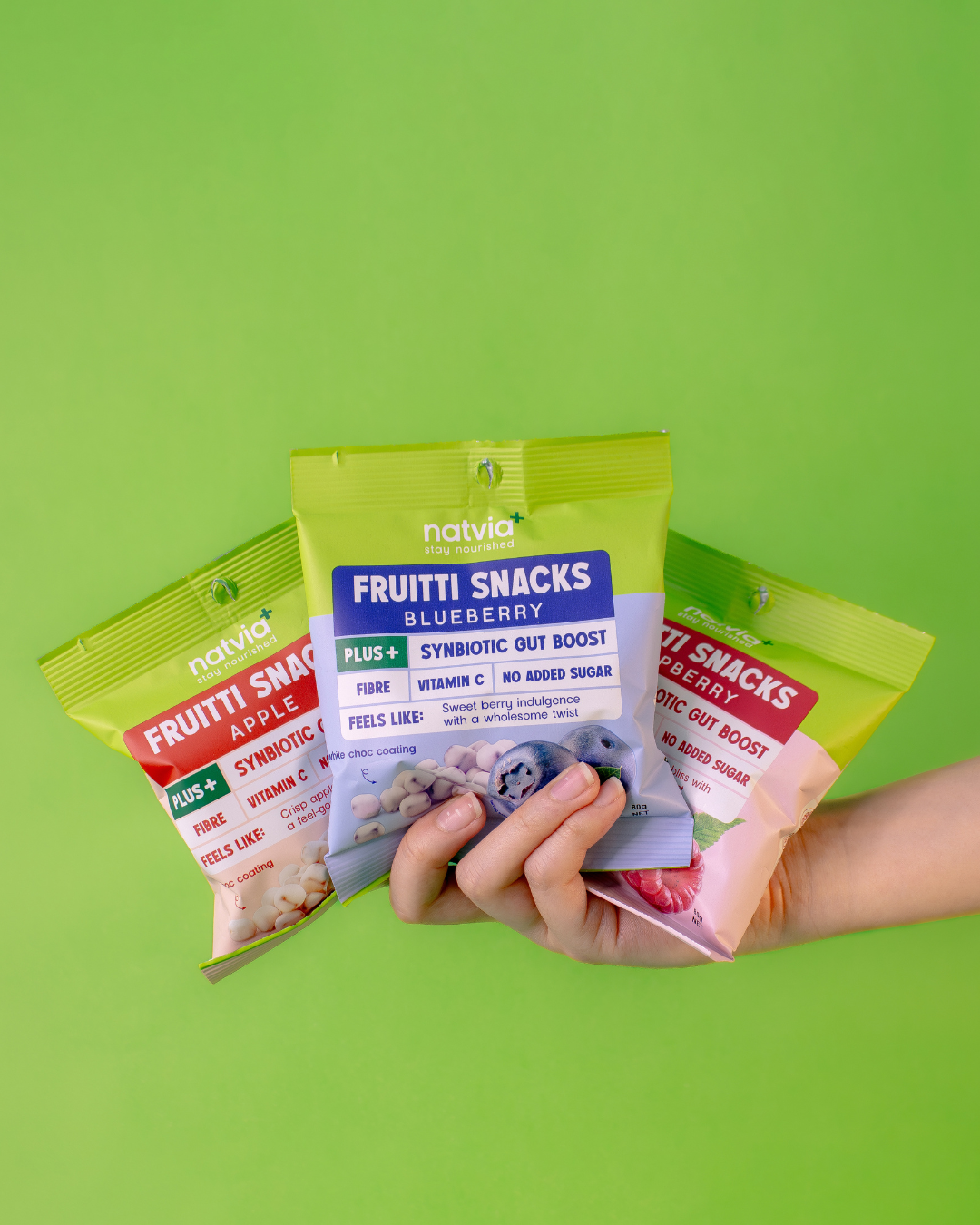
It is four in the afternoon, it is dark outside already, and the pull toward something warm and sweet feels less like a choice and more like a gravitational force. If that sounds familiar, you are not imagining it and you are not lacking discipline. Winter comfort cravings are driven by brain chemistry, evolutionary biology, and learned habit, and two or three months of satisfying them with high-sugar food has a measurable effect on the gut microbiome. Understanding what is actually driving the craving changes what it makes sense to reach for. Why the Body Craves Sugar and Comfort Food in Winter Researchers Megan Lee and Jacqui Yoxall from Southern Cross University identified three distinct drivers behind winter food cravings. The first comes down to brain chemistry: dopamine and serotonin, the chemicals most associated with feeling good, are produced in the gut as well as the brain, and both tend to decline in winter as sunlight and movement decrease. Eating carbohydrate-rich, sweet food sends a brief rush of these chemicals to the brain, which is why a hot chocolate on a cold evening can feel almost physically like relief. The second driver is evolutionary: before modern heating and food supply, humans who stored more energy in the cold months were better placed to survive them, and that drive toward calorie-dense food in winter may still be running in the background. The third is personal and learned, rooted in what was offered as comfort in childhood and reinforced by the low mood that tends to accompany shorter, colder days. None of this makes the craving irrational. What it does is explain why resisting it through willpower is such an unreliable strategy. The more useful question is not whether to eat something comforting in winter but what to eat, particularly when gut health is part of the picture. What High-Sugar Winter Snacking Does to Your Gut The gut microbiome responds to diet progressively over weeks, not just after a single meal. Research published in Nutrients tracked microbiome changes in response to high-sugar diets at 9 and 18 weeks, finding measurable and worsening shifts in bacterial composition at both timepoints. Two or three months of heavier, sweeter winter snacking is a long enough window for those shifts to become meaningful. A review in Gut Microbes found that high species richness is a consistent feature of healthy individuals, while reduced diversity is linked to systemic inflammation and metabolic disruption. Refined sugar actively disrupts that balance, feeding species that contribute to inflammation while crowding out those associated with diversity and resilience. As the Centre for Gastrointestinal Health notes, excess sugar promotes the growth of pro-inflammatory gut bacteria and reduces beneficial species, a state known as dysbiosis linked to a range of gastrointestinal and systemic issues. The American Society for Biochemistry and Molecular Biology adds that concentrated high-sugar eating can disrupt gut-brain signalling by overwhelming the microbiome faster than it can recover. A single cold afternoon is unlikely to matter much. A pattern held across the winter months does. The Winter Snacks Worth Reaching For Instead The goal is not to remove comfort from winter eating. The warmth, the sweetness, the satisfaction of something genuinely enjoyable on a grey afternoon are real needs, not indulgences to rationalise away. The question is whether those needs can be met with something that supports gut health rather than quietly working against it. The most practical swap is to look for snacks that meet the comfort craving without feeding the bacterial imbalance that high-sugar snacking creates. That means something genuinely sweet and satisfying, but low in added sugar, with fibre to support the beneficial bacteria and ideally some active gut support built in. A small handful of nuts with a piece of dark chocolate, Greek yoghurt with berries and a drizzle of honey, or roasted chickpeas with warming spices are all options that hold up well on a cold afternoon. If you want something grab-and-go that also carries prebiotic and probiotic support, Natvia Fruitti Snacks are worth keeping in the drawer: chewy white-chocolate-coated fruit bites with no added sugar, a good source of fibre, and a 2 billion synbiotic blend. The comfort is real. The blood sugar spike is not. Shop Fruitti Snacks here. For the warm drink that cold evenings call for, the Natvia Relax Rich Hot Choc carries 96% less sugar than conventional hot chocolate and is infused with lavender and chamomile adaptogens, with no artificial flavours or colours. For tea, coffee, or winter baking, the Natvia Gut Activation Sweetener replaces refined sugar with a zero-glycaemic-index alternative carrying a 150 billion synbiotic blend per canister, supporting gut health through habits that were already there. The gut-brain connection driving winter comfort cravings is also closely tied to the immune and hormonal picture covered in Why gut health is the foundation of women's wellness, worth reading alongside this if the mood and energy dimension resonates. Why the Winter Pattern Matters More Than Any Single Snack Winter is long enough for a pattern to become meaningful. The choices made consistently across three cold months shape how the body arrives at the other side of the season in ways that a single good or bad day never does. No single snack changes the microbiome significantly. But a consistent pattern that meets the winter comfort craving with something that supports gut health rather than disrupting it tends to produce a noticeably different outcome. The craving is not the problem. What it is satisfied with is where the difference lives.
Learn more
Healthy Lunchbox Ideas That Keep Kids Full and Focused
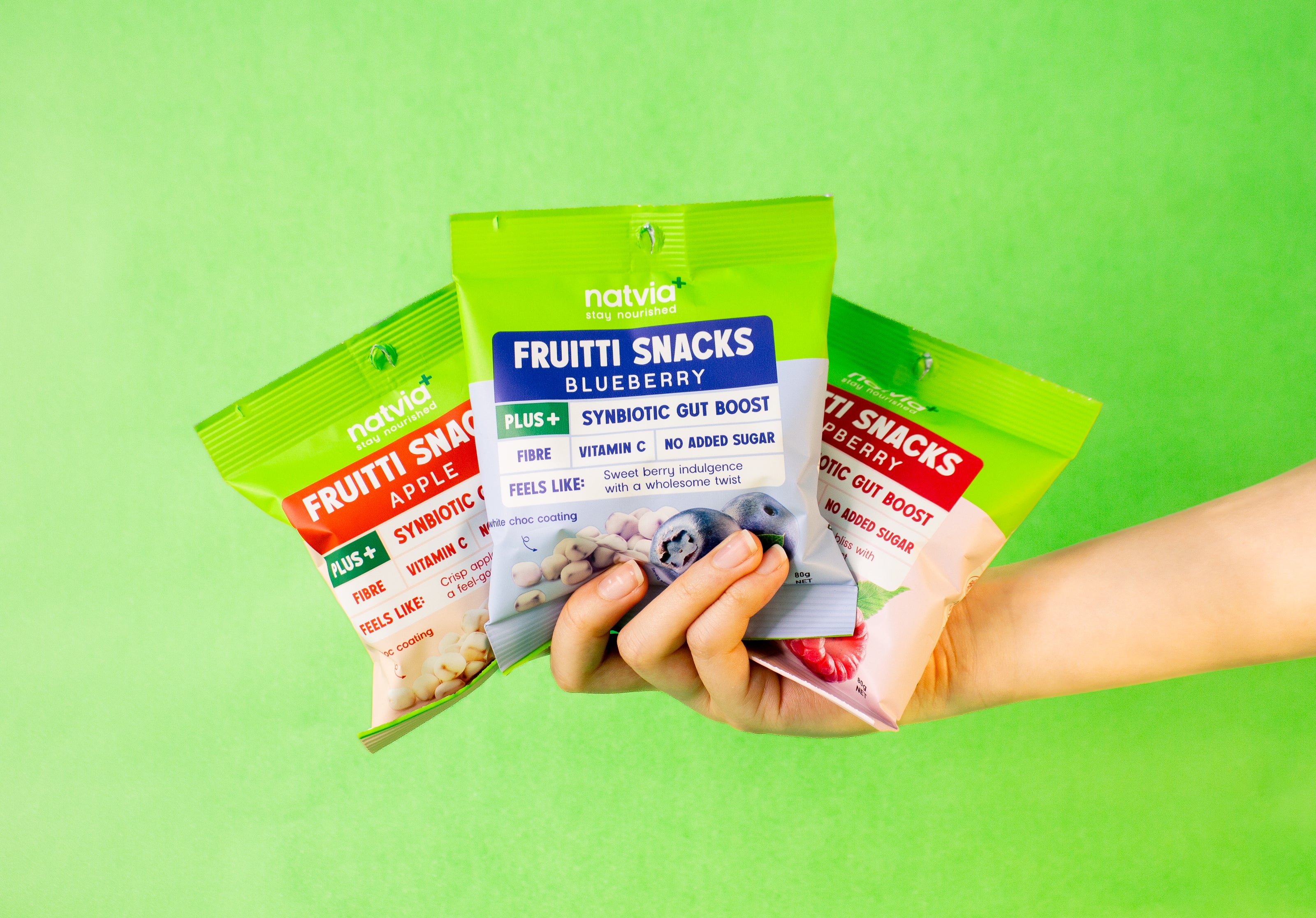
Ever feel overwhelmed trying to pack a lunchbox that's healthy, convenient and something your child will actually eat? Most lunchboxes that send kids home exhausted and snappy do not fail on the sandwich. They fail on the treat slot. That one component has a disproportionate effect on how the second half of the school day goes, and it is the easiest part of the box to fix. If your child comes home tired and hungry despite a full lunch, the energy pattern they experience in the afternoon is closely tied to what they ate at lunchtime. Understanding which part of the box is causing it changes where to focus. What the Research Says a Good Lunchbox Actually Contains Researchers at the University of Queensland identify four foundations of a lunchbox that support a child through the school day: a grain-based food for carbohydrates and energy, a protein food to support growing bodies and minds, fruits and vegetables for vitamins and minerals, and water or milk rather than sugary drinks. They are equally clear about what to leave out: fruit bars and straps, custard pouches, biscuits, chocolate bars, and muesli bars are flagged as poor choices for sustained energy and focus because they are high in sugar and low in fibre, vitamins, and minerals. A lunchbox can tick every nutritional box on the foundation side and still undermine itself entirely with what goes in the snack slot. That distinction matters more than most parents realise. Why the Treat Slot Is the Most Important Part of the Box A box with nothing enjoyable tends to come home untouched or get traded at the table. That is not a discipline issue. It is how children eat. The University of Queensland is direct on this point: if you are going to include something sweet, make it a healthier version, something that brings fruit, fibre, or whole ingredients rather than sugar alone. The treat slot does not need to disappear from the lunchbox. It needs to do better work. The Harvard T.H. Chan School of Public Health recommends keeping snacks small and pairing a protein-rich food with a carbohydrate, with a healthy fat to sustain satiety further. What keeps a child going is a combination of nutrients working together, not a quick hit of sugar that burns out before the afternoon is half over. The Balanced Lunchbox Formula That Actually Works Put it together and the formula is straightforward. A grain-based food, multigrain bread, a wrap, oat crackers, or leftover pasta or rice, provides the energy a child needs to learn and play. A protein, eggs, cheese, lean meat, tuna, beans, or hummus, supports growing bodies and keeps hunger at bay. Colourful fruits and vegetables add the vitamins and minerals. Water or milk keeps them hydrated. And then the treat. If you are looking for a smarter option in the treat slot, look for something that brings real nutritional work alongside the sweetness. The ideal lunchbox treat is low in sugar, carries some fibre, and ideally supports gut health rather than just filling a gap. Natvia Fruitti Snacks are one example: chewy white-chocolate-coated real fruit bites with no added sugar, a good source of fibre and Vitamin C, and a 2 billion synbiotic blend of prebiotics, probiotics, and postbiotics. They sit in the treat slot without triggering the blood sugar spike pattern the rest of the lunchbox is working to avoid, and they are small, portable, and genuinely looked forward to. Shop Fruitti Snacks here. Three Lunchboxes to Try This Week None of this requires extra preparation time. A multigrain sandwich with egg and cheese, a small container of cherry tomatoes, and a Fruitti Snacks pouch. Oat crackers with hummus, some cucumber sticks, and a piece of fruit. Leftover rice or pasta with some protein, a handful of berries, and water in a bottle the child actually likes drinking from. The UQ researchers also point out that involving children in packing the lunchbox, or at least showing them what is in it before school, means they are less likely to be surprised by the contents and more likely to eat them. The formula works because nothing in it asks the child to compromise. Fruitti Snacks are available in single pouches or multipacks, making it easy to keep the lunchbox stocked without thinking about it each morning.
Learn more
Why You Crave Sugar at 3pm and What to Do About It
It is 3pm. Your focus has quietly dissolved, you have reread the same sentence twice, and your hand is already moving toward the snack drawer before you have made any conscious decision to do so. The 3pm sugar craving is not a discipline problem. It is a predictable blood glucose pattern with a clear cause, and once you understand what is actually driving it, fixing it becomes considerably more obvious than "try harder." Ask most people why they reach for something sweet at three in the afternoon and they will say they lack discipline, that they are bored, that they just need to push through. None of those explanations is right. The craving is shaped by what lunch did to blood glucose and by the body's own circadian rhythm. Why the Blood Sugar Drop at 3pm Is Not Random Two things happen at once in the early afternoon and they tend to feed into each other. The first is a natural dip in alertness documented by circadian rhythm research, a dip that happens regardless of how well you slept. The second is the blood glucose fall that follows a carbohydrate-rich lunch. White bread, pasta, sweetened drinks, and anything processed that breaks down quickly tend to produce a sharp glucose spike and an equally sharp decline. That decline is what the body registers as urgent hunger, specifically as a craving for the quickest source of energy it can find. Research published in the European Journal of Nutrition has explored how repeated exposure to high-sugar foods may reinforce the craving cycle through dopamine pathways, in a pattern that resembles how other repeated habits take hold. As Health and Wellbeing Queensland notes, this is part of why the pull toward sugar in the afternoon can feel less like genuine hunger and more like a habit the brain has quietly built over time. It is also worth noting that the afternoon slump is partly set up by the morning. A meta-analysis of randomised controlled trials published in Nutrition found that high-GI breakfasts significantly elevated postprandial blood glucose at 60, 90, and 120 minutes, with a more pronounced effect in people with metabolic impairments. A breakfast that spikes blood glucose early tends to make the afternoon dip more pronounced. How to build a morning routine that supports your body is worth reading alongside this if the 3pm pattern feels persistent regardless of what lunch looks like. Why Reaching for Sugar Makes the Afternoon Slump Worse Reaching for something sweet at 3pm is not irrational. It is a reasonable response to a real biological signal. The problem is that most things people grab in that moment, a biscuit, a handful of lollies, a muesli bar with more added sugar than the packaging implies, do not resolve the signal. They replay it. Each one produces another blood glucose spike, another insulin response, another fall. The craving eases for twenty minutes. Then it comes back, and now it is an hour closer to dinner. As Dr Devlin at the University of Queensland puts it, these quick fixes often backfire, leading to another crash not long after. The snack that was supposed to fix the slump feeds the cycle that caused it. Once you see the mechanics clearly, the question shifts from "should I eat something" to "what is this thing I am about to eat actually going to do to the next hour." What Protein and Fibre Do That Sugar Cannot A 2020 meta-analysis in Physiology and Behaviour found that protein intake suppressed appetite by decreasing ghrelin, the hunger hormone, while increasing feelings of fullness and satiety. Fibre is consistently associated with more stable blood glucose over time, meaning the sharp rise-and-fall pattern that drives the 3pm craving is less pronounced when a meal or snack contains meaningful amounts of both. Together, they do not just postpone the craving. They change the shape of the afternoon. This is not a prescription for a more complicated eating routine. It is simply a case for paying attention to what that snack is made of. What to Snack on at 3pm Instead The answer is not to stop snacking. Your body is sending a real signal, and ignoring it rarely ends well. The answer is to swap what you reach for. The ideal 3pm snack is still genuinely satisfying and still hits that sweet craving, but it does not send blood glucose on another ride. That means low in sugar, high in fibre, and ideally carrying something extra that supports the body rather than just buying you twenty minutes of quiet. Natvia Fruitti Snacks were built for exactly this moment. They are chewy white-chocolate-coated fruit bites with no added sugar, and each serve delivers a good source of fibre alongside a 2 billion synbiotic blend of prebiotics, probiotics, and postbiotics. So the craving gets something genuinely delicious. The blood glucose pattern does not get fed. And your gut gets a little something extra while you are at it. They come in Apple, Raspberry, and Blueberry, in single 80g pouches or multipacks. Try them here and see the difference a better snack makes at 3pm. Why Proximity Beats Willpower Every Time Changing the 3pm habit has very little to do with resolve and a great deal to do with what is already within reach when the craving hits. The snack that wins is the one already in the drawer. Multiple studies confirm this: research published in Appetite found that simply making a lower-calorie food more physically proximate reduced total energy intake even when a more preferred higher-calorie option was also available. Proximity, not intention, determines what most people eat in a moment of low energy and high craving. When what is within reach is genuinely satisfying and does not restart the blood sugar cycle, the afternoon tends to take care of itself. Stock your drawer with healthy snacks that you like. The afternoon tends to take care of itself from there.
Learn more
How to Build a Morning Routine That Actually Supports Your Body
Spend five minutes researching morning routines and you will find a forty-five-minute schedule built around cold exposure, a supplement stack, a gratitude journal, and a protein shake blended to precise macros. It is aspirational in the way that most things designed for someone else's life tend to be, and for most people it closes within two weeks. The gap between the described routine and the one that actually happens is not a willpower problem. It is a design problem. What gets lost in these conversations is a simpler idea: the habits most worth investing in are the ones already running. The coffee gets made. Breakfast happens, or it does not, in a way that is already shaping how the morning feels. The question worth asking is not what can be added, but whether what is already there is working with the body or quietly working against it. Why the Body Arrives at Morning Already Behind Sleep is a long stretch without water. Seven or eight hours of breathing, metabolism, and cellular repair with no fluid intake means the body arrives at waking already mildly dehydrated, and most people have simply come to experience this as how mornings feel. Research published in the Journal of the American College of Nutrition found that dehydration at just two percent of body mass may impair attention, psychomotor response, and immediate memory, in ways that can feel indistinguishable from tiredness or needing more sleep. A review in ACSM's Health and Fitness Journal noted that concentration, short-term memory, and mood can all be affected at this level. Drinking water before or alongside the first coffee addresses a deficit that is already present. Coffee carries a mild diuretic effect at higher volumes, which means drinking it before rehydrating may compound the overnight deficit rather than resolve it. The foggy first hour is not inevitable, and it often has less to do with sleep quality than it does with what the body is waiting for. What a Protein-First Breakfast Does to Energy and Appetite Through the Day The composition of the first meal shapes the hormonal environment of the entire morning in ways that extend well past ten o'clock. Protein triggers a different metabolic response than refined carbohydrates, and that difference tends to matter more than most people realise when they are reaching for toast or cereal because it is quick. A 2024 study in the Journal of Dairy Science found that a high-protein breakfast significantly increased satiety in the three hours after eating compared with a high-carbohydrate equivalent or skipping breakfast entirely, and also produced a measurable improvement in cognitive concentration before lunch. Protein-rich meals tend to suppress ghrelin, the hunger hormone, while stimulating satiety signals, producing steadier energy and fewer mid-morning cravings. A protein-anchored breakfast does not need to be elaborate to be effective. Eggs, Greek yoghurt with seeds, cottage cheese, or a smoothie with a protein base all reflect the same underlying principle, and the benefit of more stable blood glucose at subsequent meals across the day tends to extend well beyond the morning itself. How Cortisol and Blood Sugar Interact in the First Hour After Waking Most people know cortisol as a stress hormone without knowing much about its daily rhythm. It follows a predictable arc, peaking in the thirty to forty-five minutes after waking in what researchers call the cortisol awakening response. A review in Endocrine Reviews describes this as a preparatory mechanism, readying the brain and body for the demands of the day ahead. In a well-functioning system, the cortisol curve rises, peaks, and then declines steadily through the morning. The problem arises when that arc is extended or disrupted. Cortisol plays a direct role in blood sugar regulation. Research published in Advances in Experimental Medicine and Biology shows that when cortisol is elevated, the body releases more glucose while reducing its uptake in muscle tissue. Adding a sugar load at the precise moment cortisol is already at its morning peak compounds that effect, and the mid-morning energy dip, the difficulty concentrating around eleven, the low-level irritability that seems to arrive from nowhere, these often have a physiological origin that is traceable back to breakfast. The Natvia Gut Activation Sweetener has a glycaemic index of zero, delivering sweetness without triggering a blood glucose response and allowing the morning cortisol curve to follow its natural arc rather than extending it. What Breakfast Has to Do With the Gut Microbiome The gut microbiome is shaped gradually and cumulatively by what is eaten across the day, including at breakfast, though most people do not think of their morning meal as gut health territory. Synbiotics combine live probiotic cultures with the prebiotic fibres that feed them, supporting the growth of beneficial gut bacteria more effectively than either component does in isolation. A meta-analysis published in Nutrition Reviews found a favourable effect on beneficial bacterial populations in healthy adults using synbiotic interventions. Refined sugar tends to feed the less beneficial bacteria in the gut while reducing overall microbial diversity over time, which may impair serotonin production and is often associated with low-level inflammation. The Natvia Gut Activation Sweetener contains a 150 billion synbiotic blend per canister, combining prebiotics, probiotics, and postbiotics. Used exactly like any other sweetener in coffee or cooking, the gut support arrives through a habit that was already there. What a Morning That Works for the Body Actually Looks Like A morning routine worth keeping tends to look, from the outside, almost identical to what was already happening. It does not require waking at five, a colour-coded tracking system, or willpower in generous supply. A glass of water before the coffee, a breakfast that leads with protein, and a sweetener that handles the morning ritual without a blood glucose response or a disruption to the gut microbiome. The habits that endure are the ones that happen without friction. These are already close to that.
Learn more
The Hidden Link Between Gut Health and Mental Wellbeing
Being a millennial or Gen Z right now comes with a particular kind of background noise that is difficult to name and harder to shake. The cost of living, the relentlessness of the news cycle, the low-grade sense of being watched and evaluated online. A UNICEF study has noted that ongoing global instability has significantly impacted Gen Z's mental health, and the pressures underneath that finding are ones most people in these generations recognise without needing to be told. The usual explanations tend to centre on screens, chronic stress, and disrupted sleep, and none of those is wrong. They are just not the whole picture. There is a contributing factor that sits closer to home, and closer to the body, than most people consider: the gut. Not as a metaphor for intuition, but the actual digestive system, home to trillions of microorganisms collectively known as the gut microbiome. That community does far more than process food, and its influence on mood, anxiety, and everyday mental wellbeing is more direct than the mainstream conversation around stress tends to acknowledge. Why Gut Health Has Become Part of the Mental Wellbeing Conversation Gut health has moved, in a relatively short period of time, from a niche clinical concern to something people discuss openly as part of how they feel day to day. Conditions like IBS, once rarely spoken about outside a doctor's office, are now part of broader public conversations about wellbeing, and the visibility reflects a real shift in prevalence. Clinicians point to stress as a significant driver, given that IBS is understood as a brain-gut disorder in which the nervous system wiring of the digestive tract responds directly to psychological pressure. A generation carrying elevated baseline anxiety tends, unsurprisingly, to also carry elevated rates of gut dysfunction. What receives far less attention is that the relationship does not run in one direction only. A disrupted gut does not simply react to stress. There is growing evidence to suggest it may also be contributing to it. Where the Body Actually Produces Serotonin Most people carry an assumption that serotonin, the neurotransmitter most associated with mood regulation, is produced primarily in the brain. Research published in Frontiers in Pharmacology has confirmed that roughly 90 percent of the body's serotonin is produced in the gut, by specialised cells lining the intestinal wall. A separate review in Integrative Medicine places that figure closer to 95 percent. This gut-produced serotonin activates nerve endings that connect directly to the brain, which means the brain's serotonin system is, in a very real sense, downstream of what is happening in the digestive tract. The health of the gut microbiome shapes how efficiently that process runs. A well-supported microbiome tends to be associated with more stable mood and steadier energy across the day. One that is consistently disrupted or fed poorly may contribute to the kind of low mood and fatigue that people often attribute entirely to external circumstances, workload, relationships, the news, without ever considering the environment in which those feelings are being processed. The Two-Way Relationship Between the Gut and the Brain The gut-brain axis is the term researchers use for the communication network running between the digestive system and the brain, and it operates through several overlapping channels at once. The vagus nerve runs directly from the brainstem to the abdomen. The enteric nervous system, sometimes called the second brain, lines the gut wall with hundreds of millions of nerve cells capable of operating independently of the central nervous system. A significant proportion of the immune system resides in the gut, and the bloodstream continuously carries microbial signals upward toward the brain. Most people are broadly aware that stress can unsettle the gut. The reverse is equally true and considerably less discussed. A 2025 review in Frontiers in Pharmacology found that disruptions to the gut microbiome may impair this communication network in ways linked to changes in brain chemistry associated with depression and anxiety. The key mechanism involves tryptophan, the amino acid the body draws on to produce serotonin. When the balance of gut bacteria shifts away from beneficial strains, the bacteria that support tryptophan processing may be depleted, and serotonin availability may be influenced as a result". Tryptophan may also be diverted into a separate metabolic pathway that produces compounds associated with low mood and neuroinflammation. Research published in PMC describes how this diversion may both reduce serotonin and promote the kind of low-level brain inflammation that has been linked to depression. For a generation already navigating elevated anxiety as a near-constant background condition, that mechanism is worth sitting with. What the Research Says About Synbiotics Probiotics are live cultures that may support the health and diversity of the gut microbiome. Prebiotics are the fibres that feed those bacteria and help them establish. Postbiotics are the beneficial compounds produced as probiotics carry out their work. As the University of Melbourne explains, these include short-chain fatty acids that tend to support the gut lining and broader immune function. A synbiotic combines all three, and the evidence suggests that this combination tends to offer more complete microbiome support than any single component in isolation. The research connecting these interventions to mood is still developing, and outcomes vary across strains and population groups. The direction of the evidence, however, is consistent. A 2025 meta-analysis in BMC Psychiatry reviewed 72 clinical trials and found meaningful reductions in depression and anxiety among people using probiotic, prebiotic, or synbiotic interventions compared to placebo. A separate review in Nutrition Reviews found similar patterns in depression severity across clinically diagnosed groups. None of this positions synbiotics as a treatment for clinical depression or anxiety, but it does suggest that a healthier, more diverse microbiome tends to be associated with better mood outcomes, particularly for people navigating the kind of background low mood that shapes daily life without ever quite reaching a clinical threshold. How Daily Food Choices Connect to Gut and Mood Over Time When gut health comes up in conversation, most people think first of a probiotic supplement, something additional, something separate from the day. The more interesting question is whether gut support can arrive through the patterns already in place, because the habits that shape the microbiome are largely the ones already running quietly in the background. Refined sugar tends to feed the less beneficial bacteria in the gut while reducing overall microbial diversity over time. A less diverse microbiome is often associated with dysbiosis, which may impair serotonin production and increase low-level inflammation. High sugar intake is also linked to blood glucose fluctuations and the cortisol and insulin responses that follow, which tend to affect both the gut environment and mood in ways that accumulate gradually rather than announce themselves. The Natvia Gut Activation Sweetener has a glycaemic index of zero, so it does not contribute to the blood glucose cycle that refined sugar tends to sustain. With a 150 billion synbiotic blend per canister designed to support the growth of beneficial gut bacteria, it functions exactly like sugar in coffee or cooking, meaning the gut support arrives through something already woven into the day rather than added on top of it. The Quiet Cumulative Effect of What We Eat Every Day The gut-brain connection is not new science, but awareness of it has not yet filtered into everyday food choices the way that other areas of nutrition research have. Most people carry some understanding of how food affects energy or body composition. Fewer have considered that the bacteria living in the digestive tract may be quietly shaping how mood, focus, and anxiety show up across the week, in ways that are gradual enough to be almost invisible until they are not. For more on how gut health intersects with broader wellbeing, Why Gut Health Is the Foundation of Women's Wellness is a useful companion read.
Learn more
We make healthy shopping easy

Customer service
Feel free to reach out, and we’ll get back to you as soon as possible

Fast free shipping
Get free shipping on orders of $100 or more

Subscribe and save
Subscribe to our newsletter and get 15% off your next order

Secure payment
Your payment information is processed securely